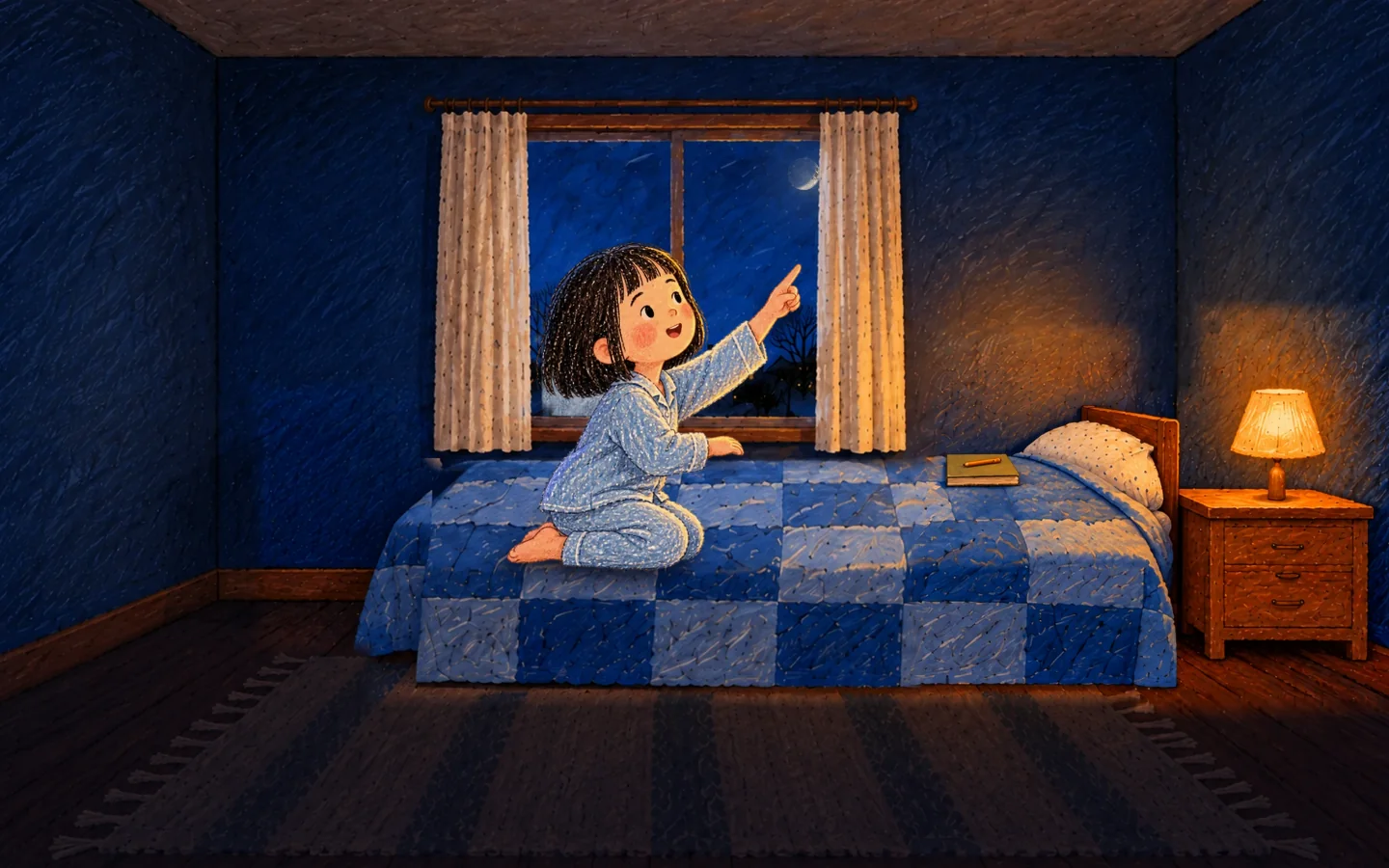
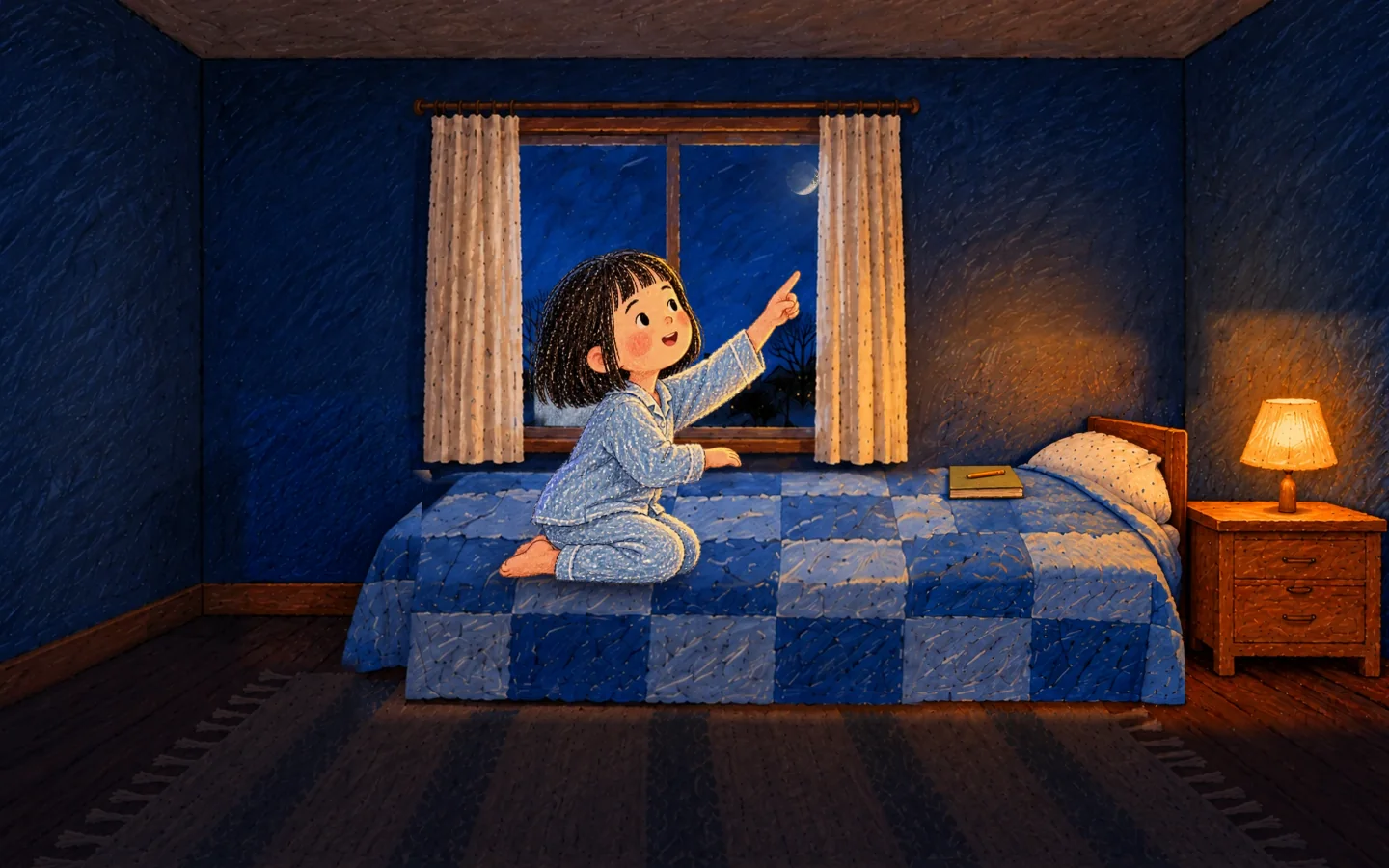
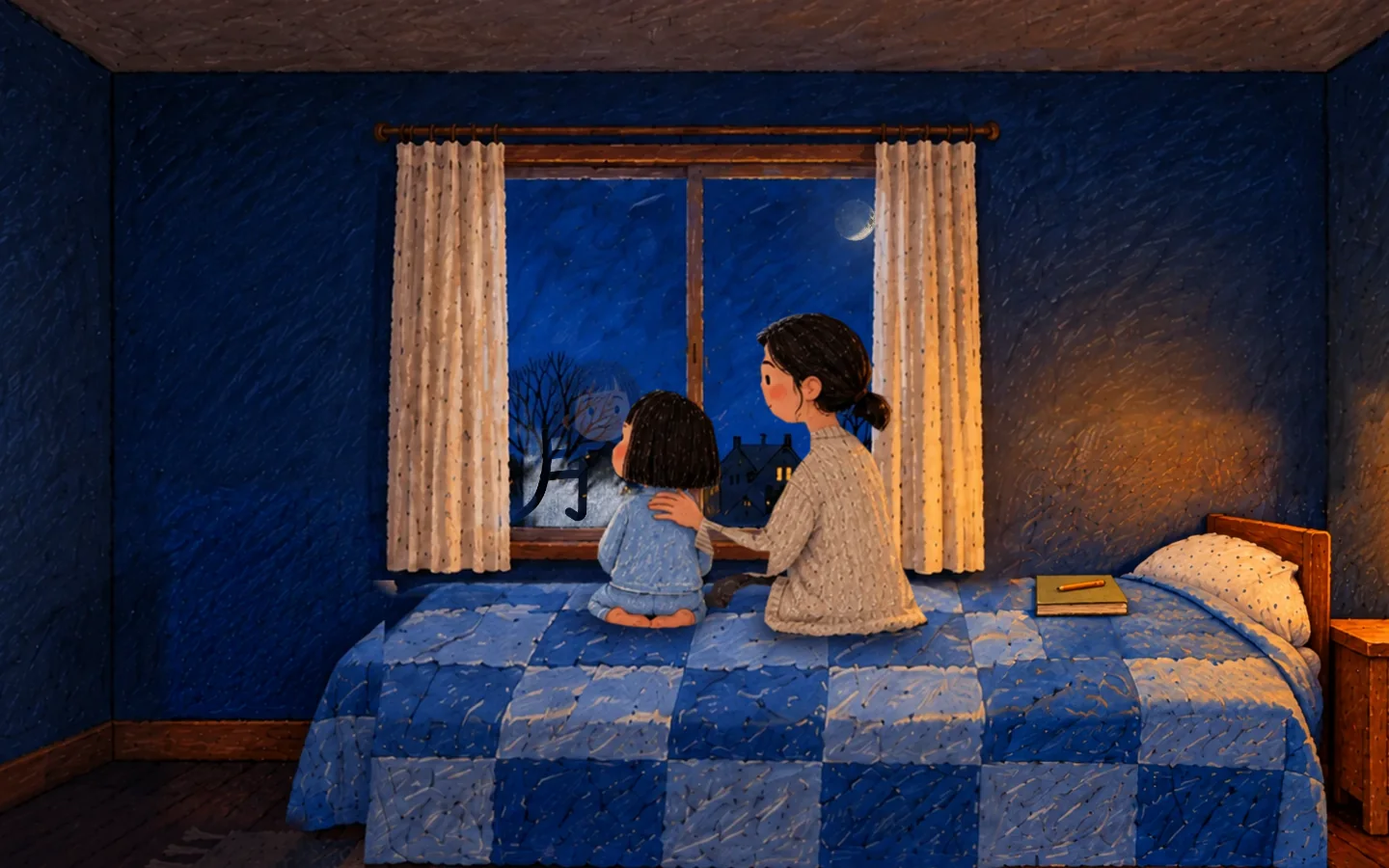
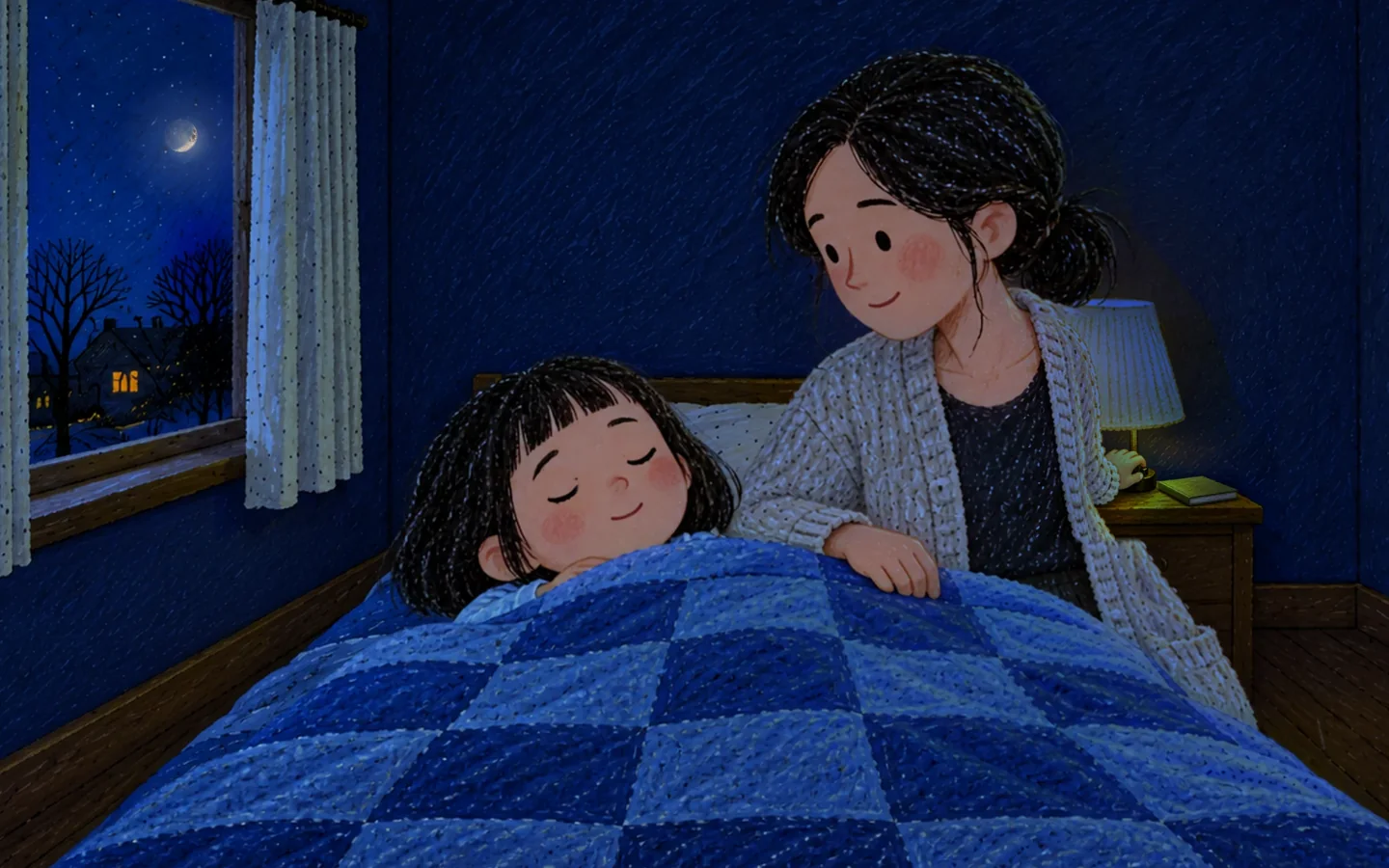
A child’s bedroom at night. A girl kneels on her bed at the window, a crescent moon in the upper corner of the glass, a warm lamp on the nightstand.
She points at the moon. Girl: Mama, what’s that?
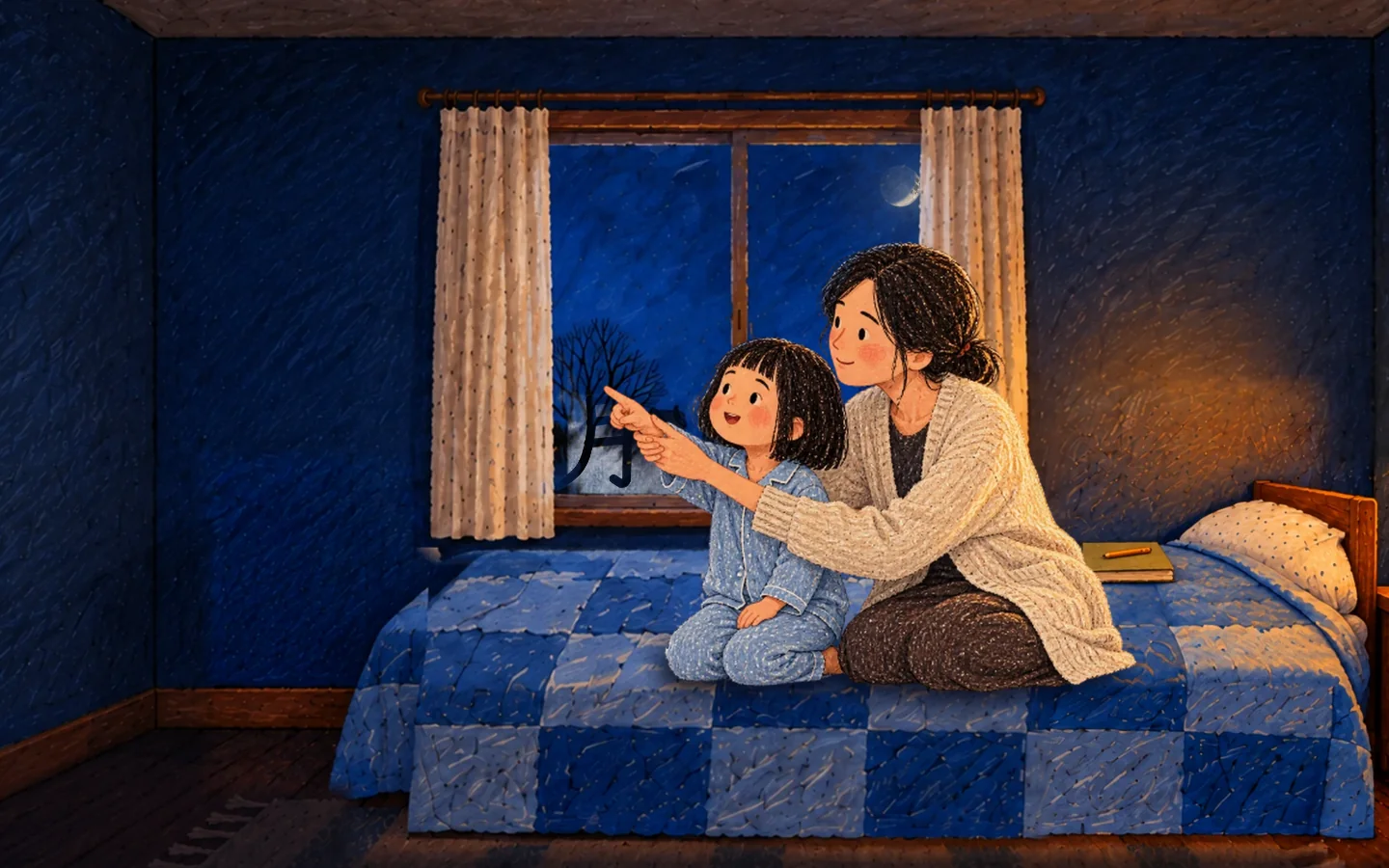
Her mother sits beside her and guides her finger across the fogged corner of the glass, writing 月. Mother: That’s the moon. Mother: You know what? In Chinese, “moon” is written 月.
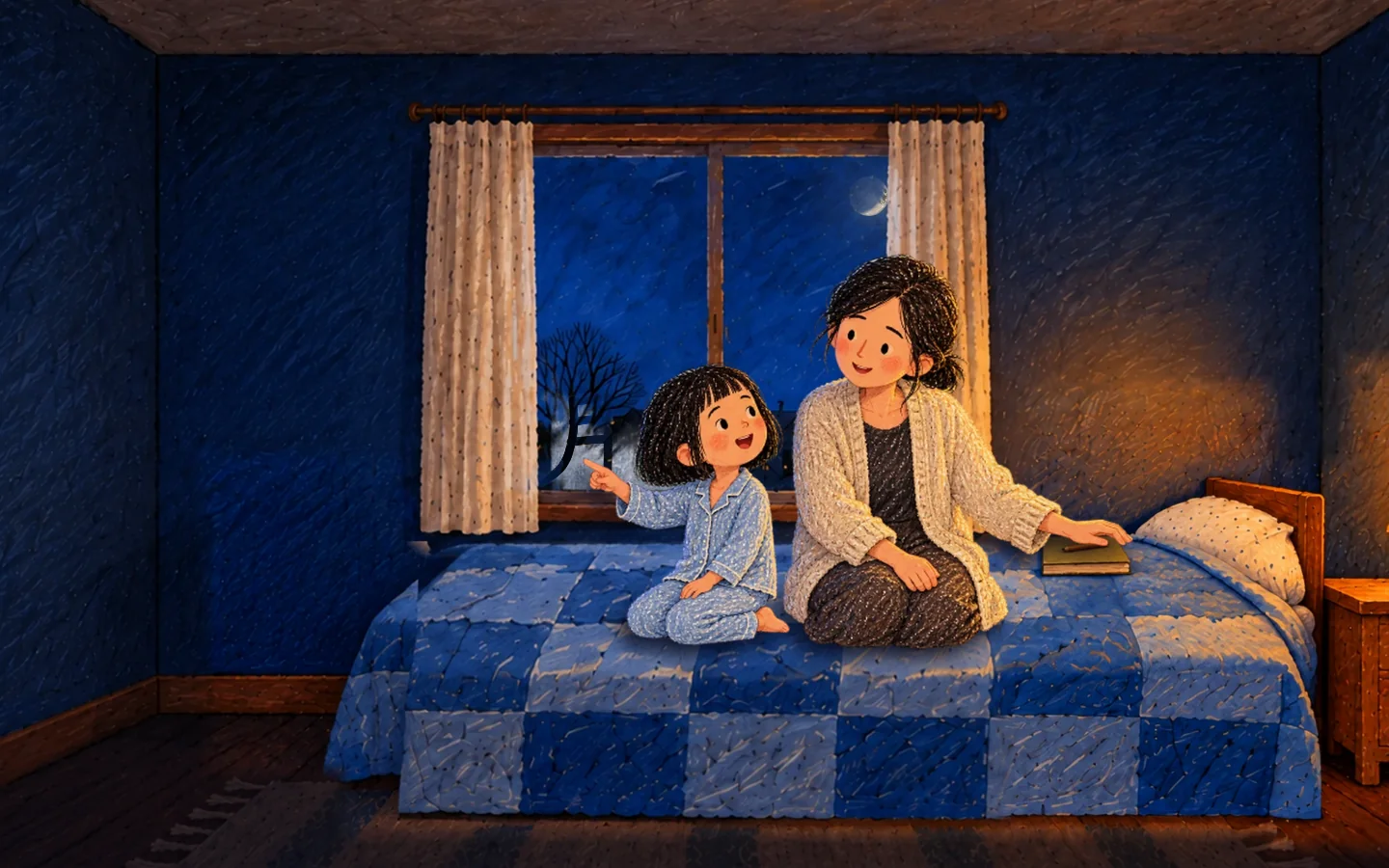
The girl points at the written character and looks back at her mother, who reaches for the sketchbook. Girl: Why does it look like that? Mother: Let me show you.
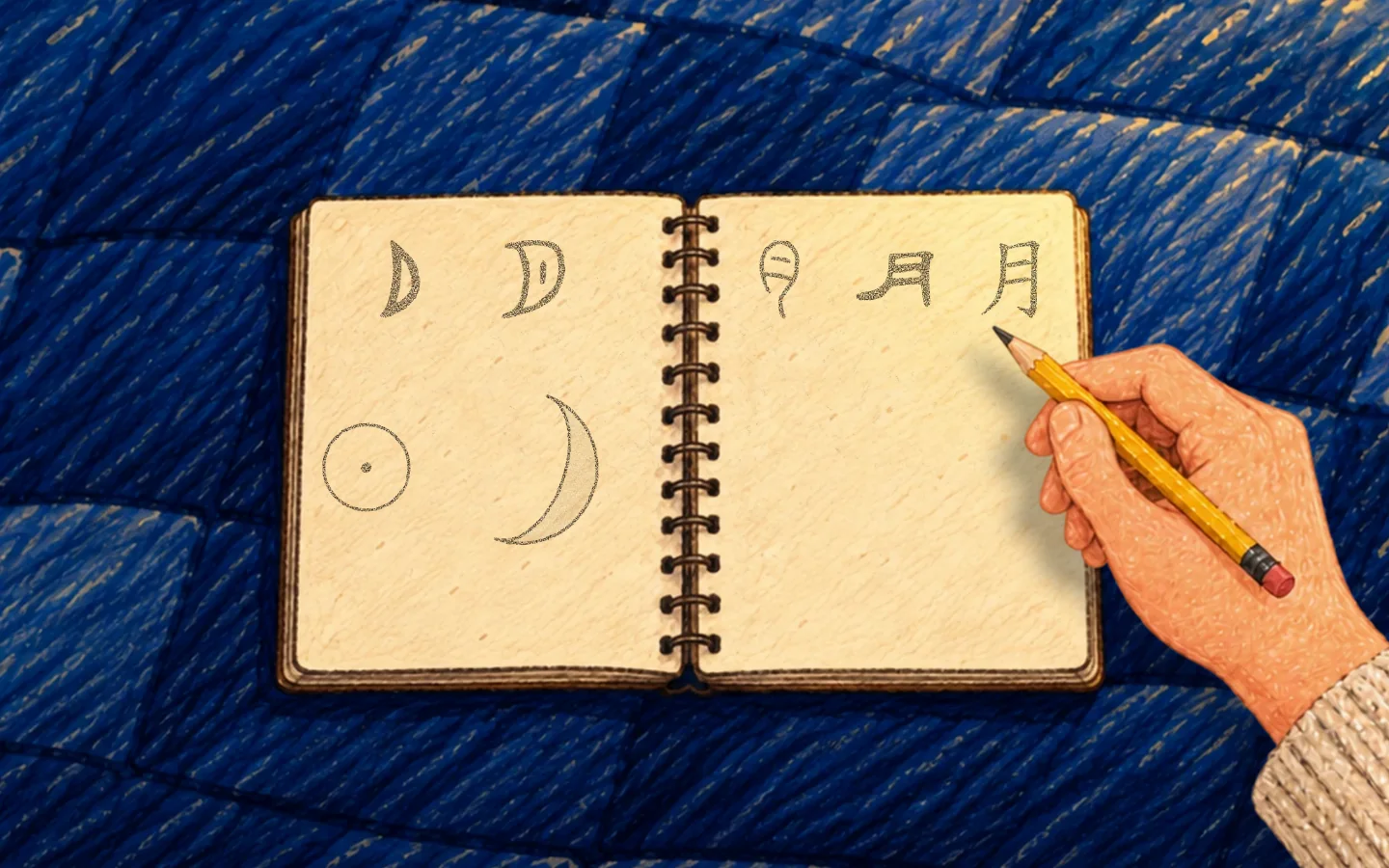
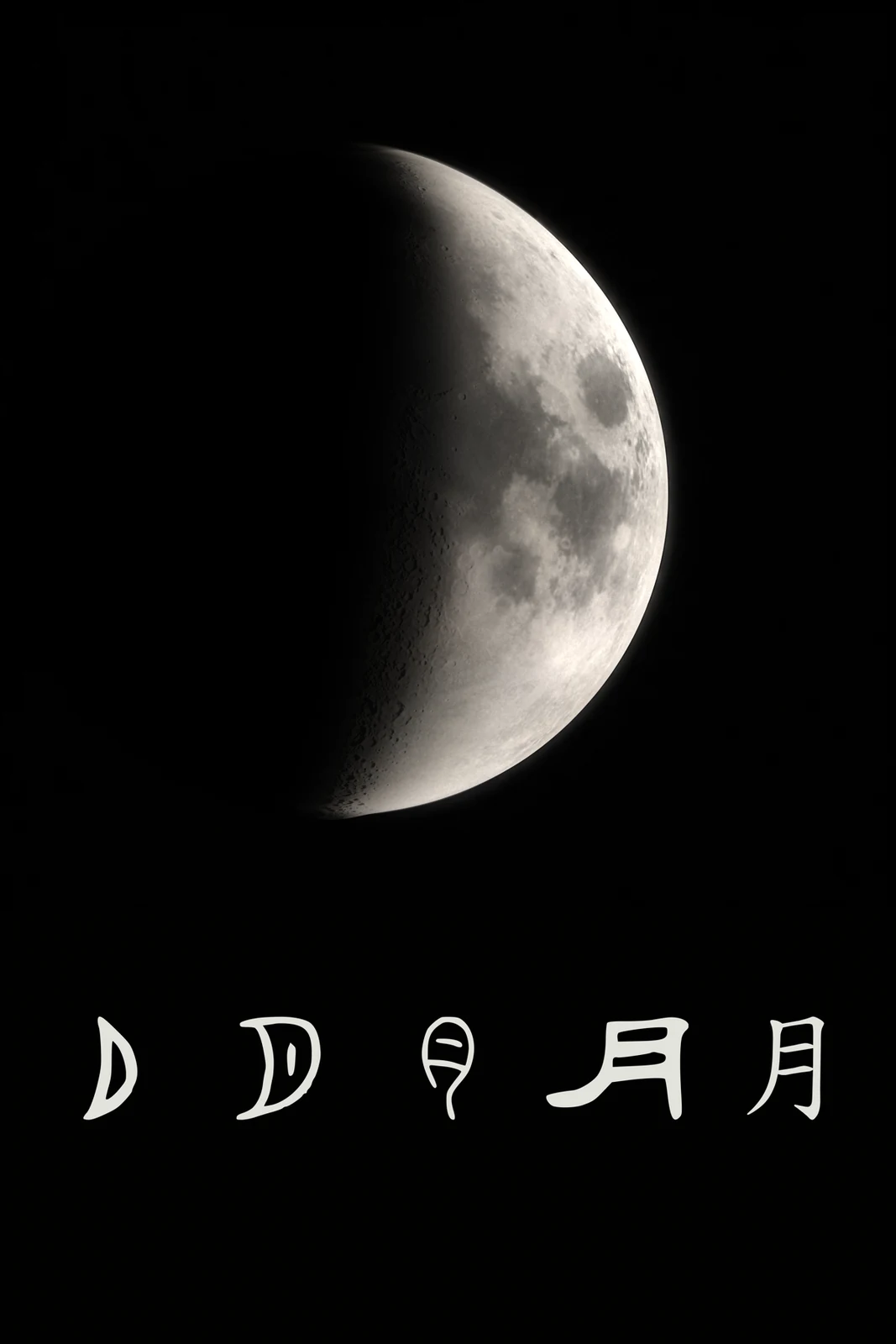
The open sketchbook. Her mother’s pencil draws a crescent moon and, beside it, the oldest written form of 月; then a small circle for the sun; then 月 in four later scripts: bronze, seal, clerical and regular. Mother: Over three thousand years ago, people carved what they saw into bone and shell. Mother: A circle meant the sun. A crescent meant the moon. Mother: Copied by hand, generation after generation, it slowly became the 月 we write today.
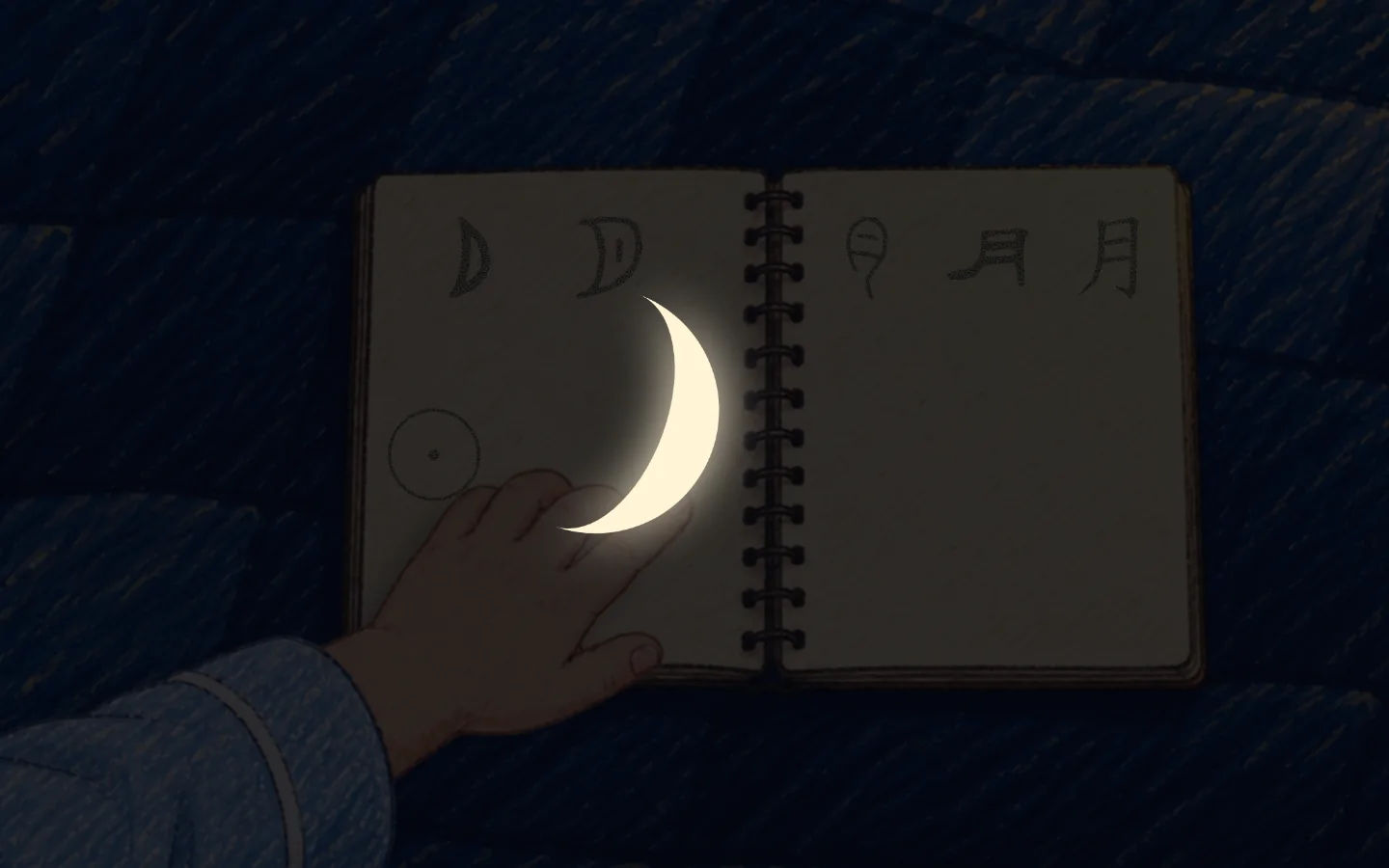
The girl’s small hand touches the drawn crescent. It lifts off the page and begins to glow. Girl: But what is the moon, really? Mother: Let me tell you a story.
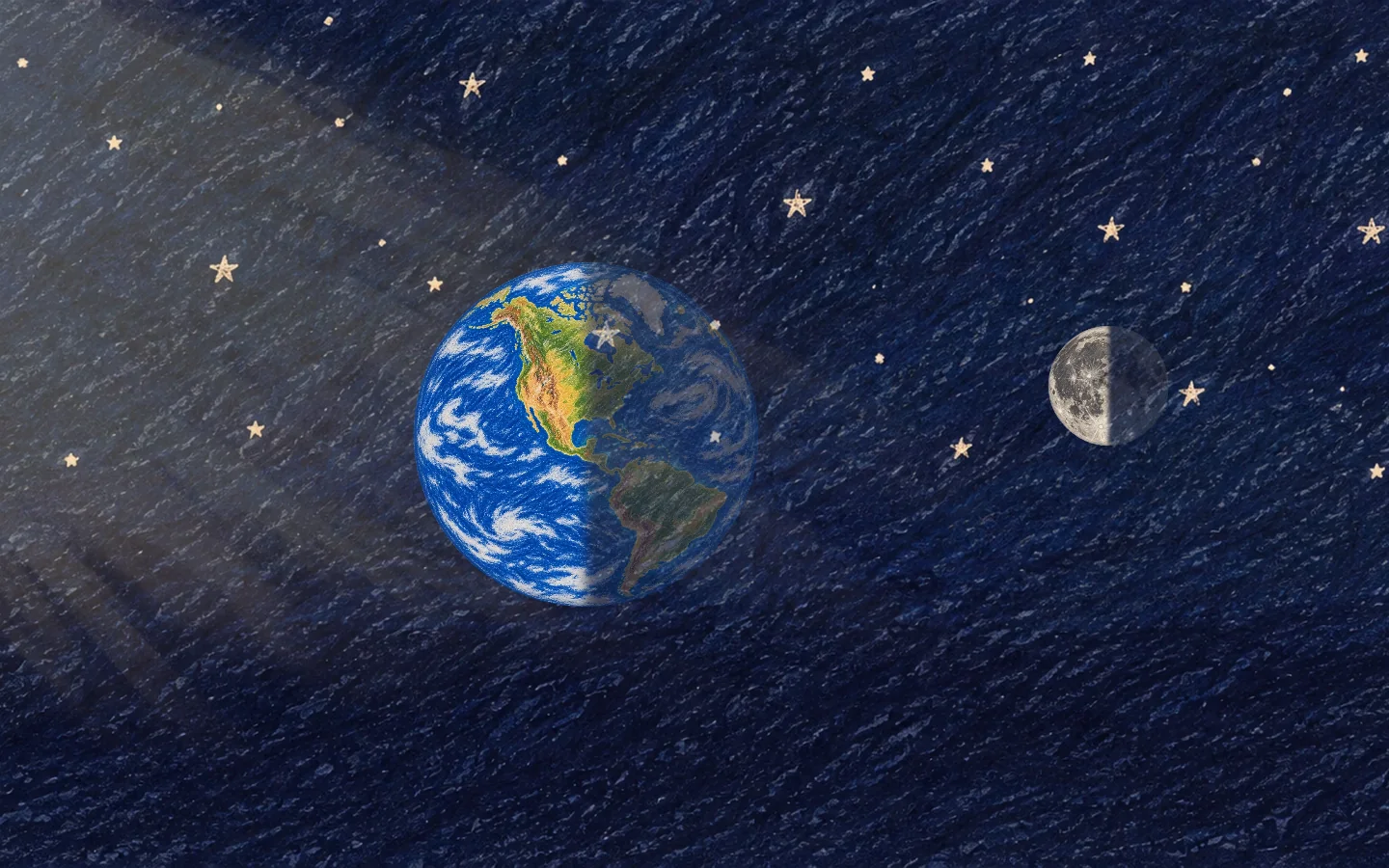
Out in space. Sunlight comes from the left. Earth and the Moon are each lit on the side that faces the Sun. Mother: The moon is a big ball of rock. It doesn’t shine on its own. Mother: The sun lights up half of it.
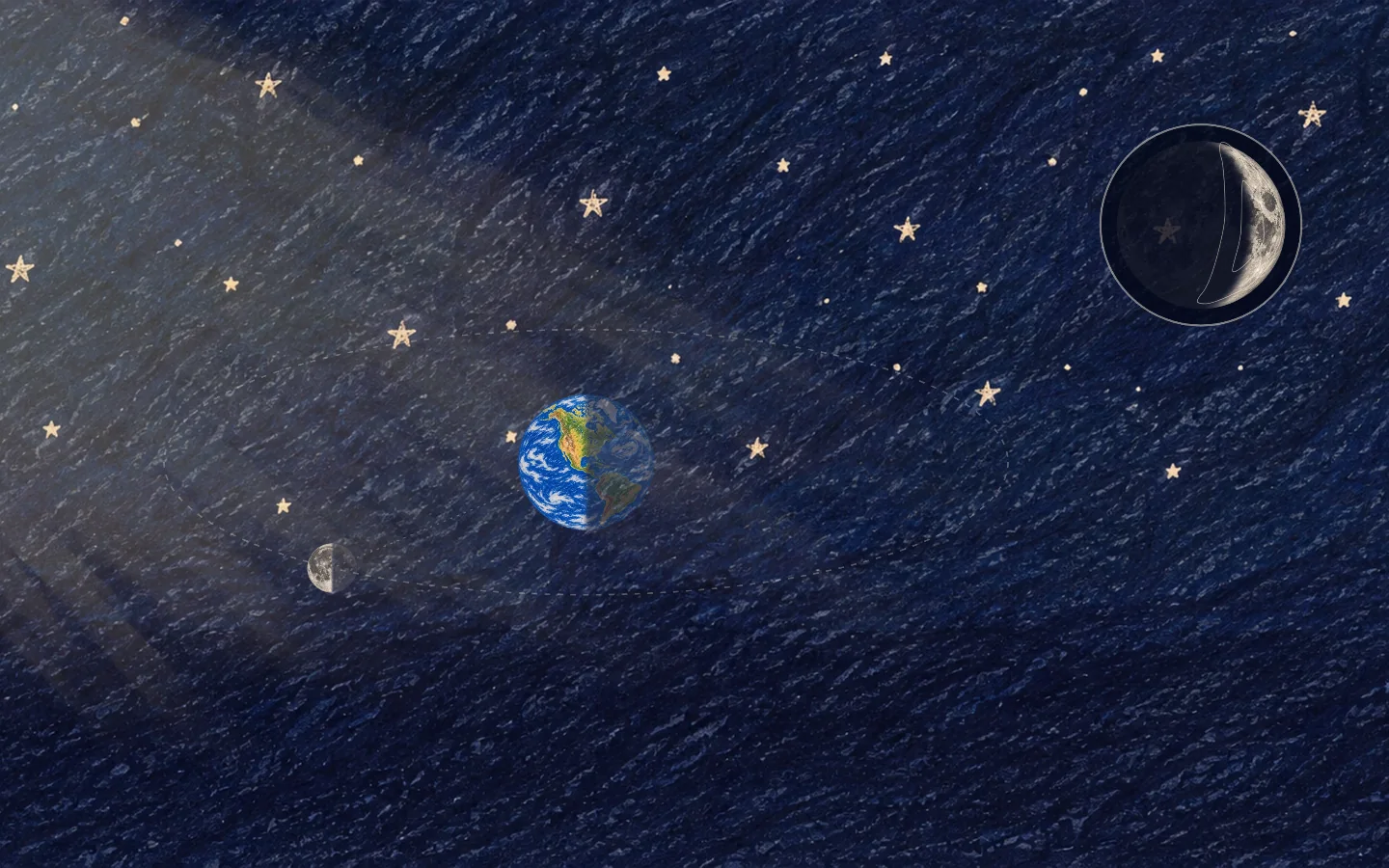
The Moon circles Earth, always half lit by the Sun. A small window shows it as seen from Earth: full, shrinking until it disappears, then a thin crescent again, the same curve as the oldest written form of 月. Mother: As it circles us, we see more or less of its bright side. Mother: That curve is where the sunlight ends. It’s the curve people drew.
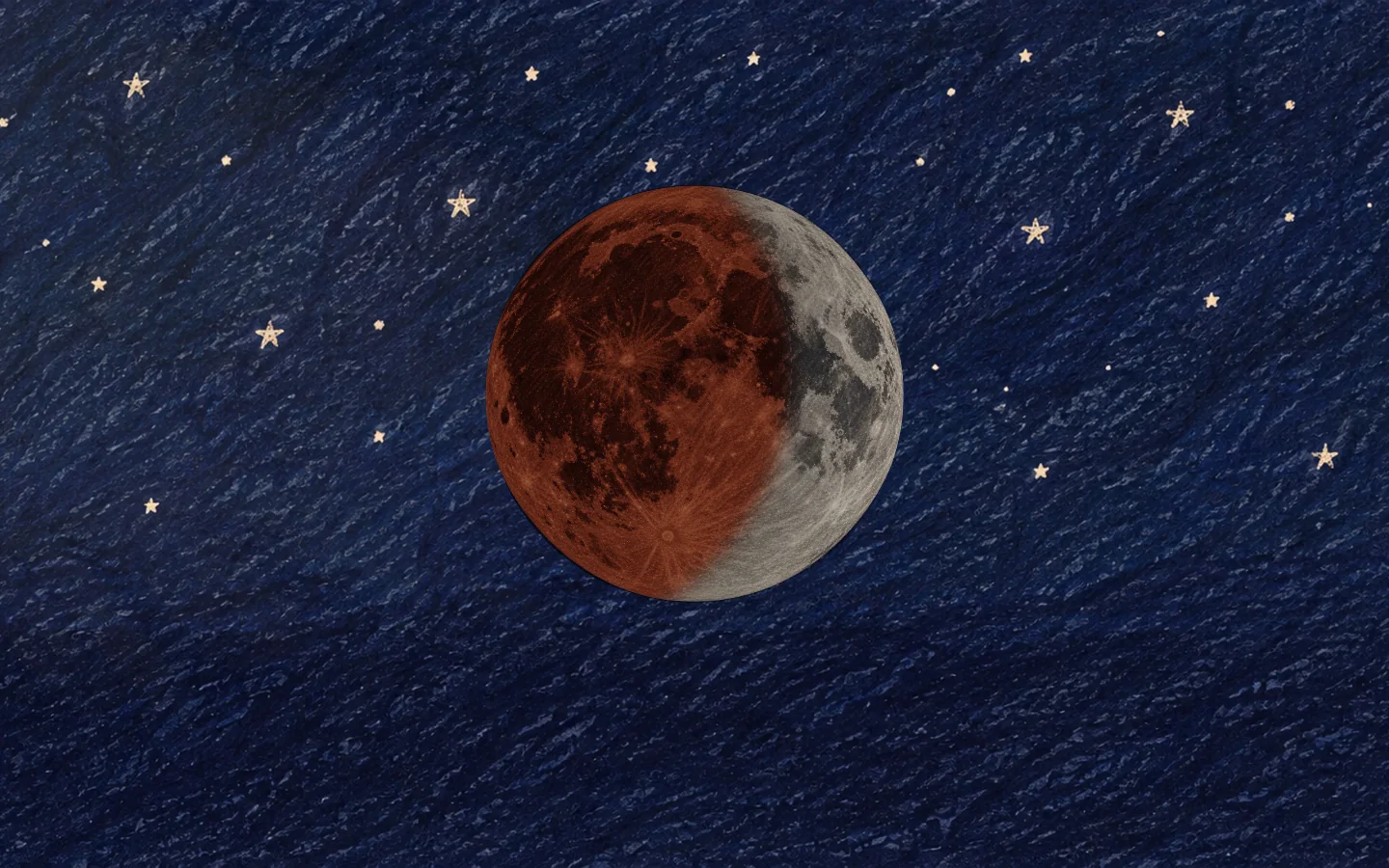
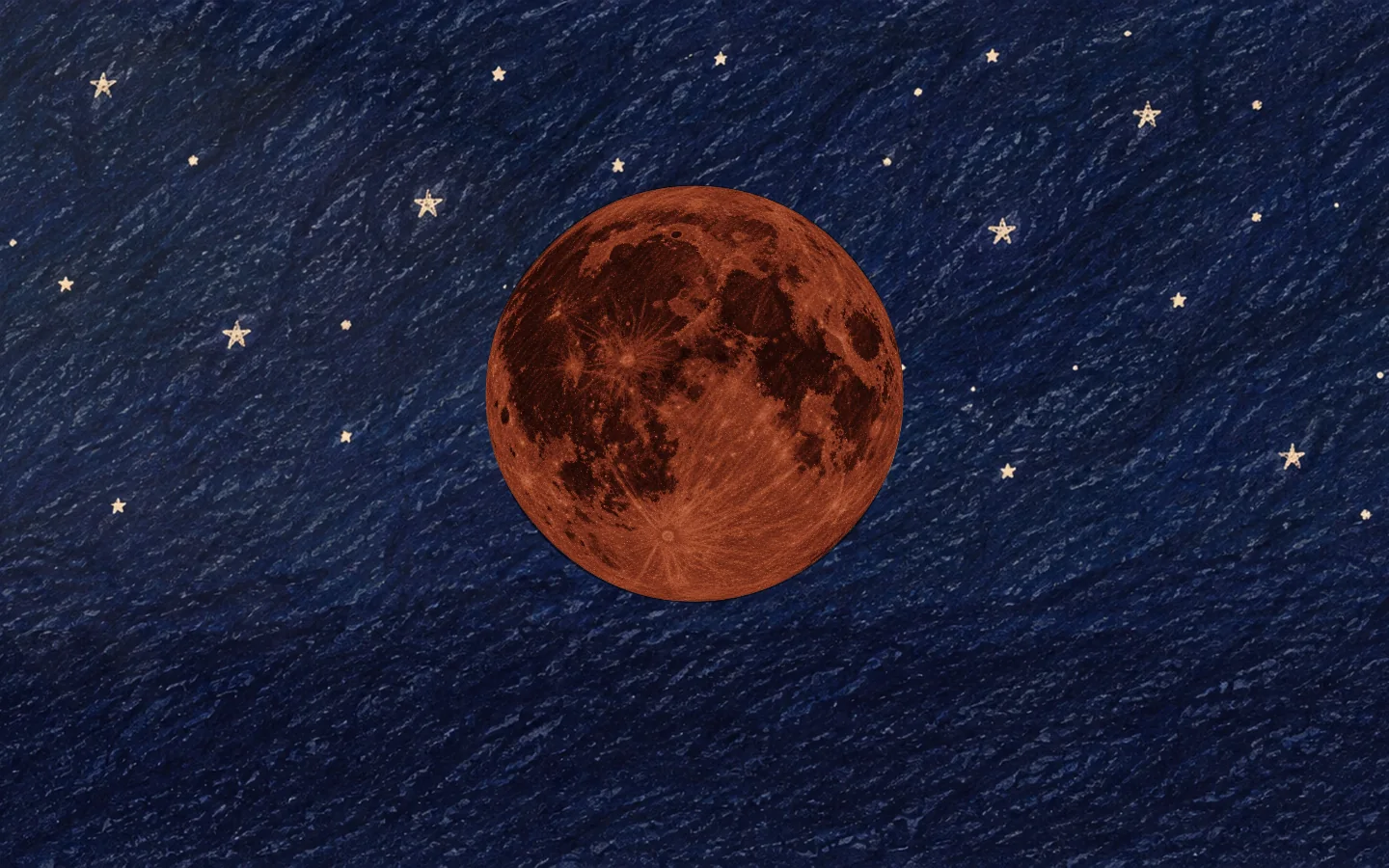
The full Moon slides into Earth’s shadow. The shadow’s edge on the Moon is curved; at totality the Moon turns a deep copper red. Mother: Sometimes Earth’s shadow falls on the moon. Mother: See its round edge? That’s us. Mother: Long ago, people saw that curve and knew the Earth is round.
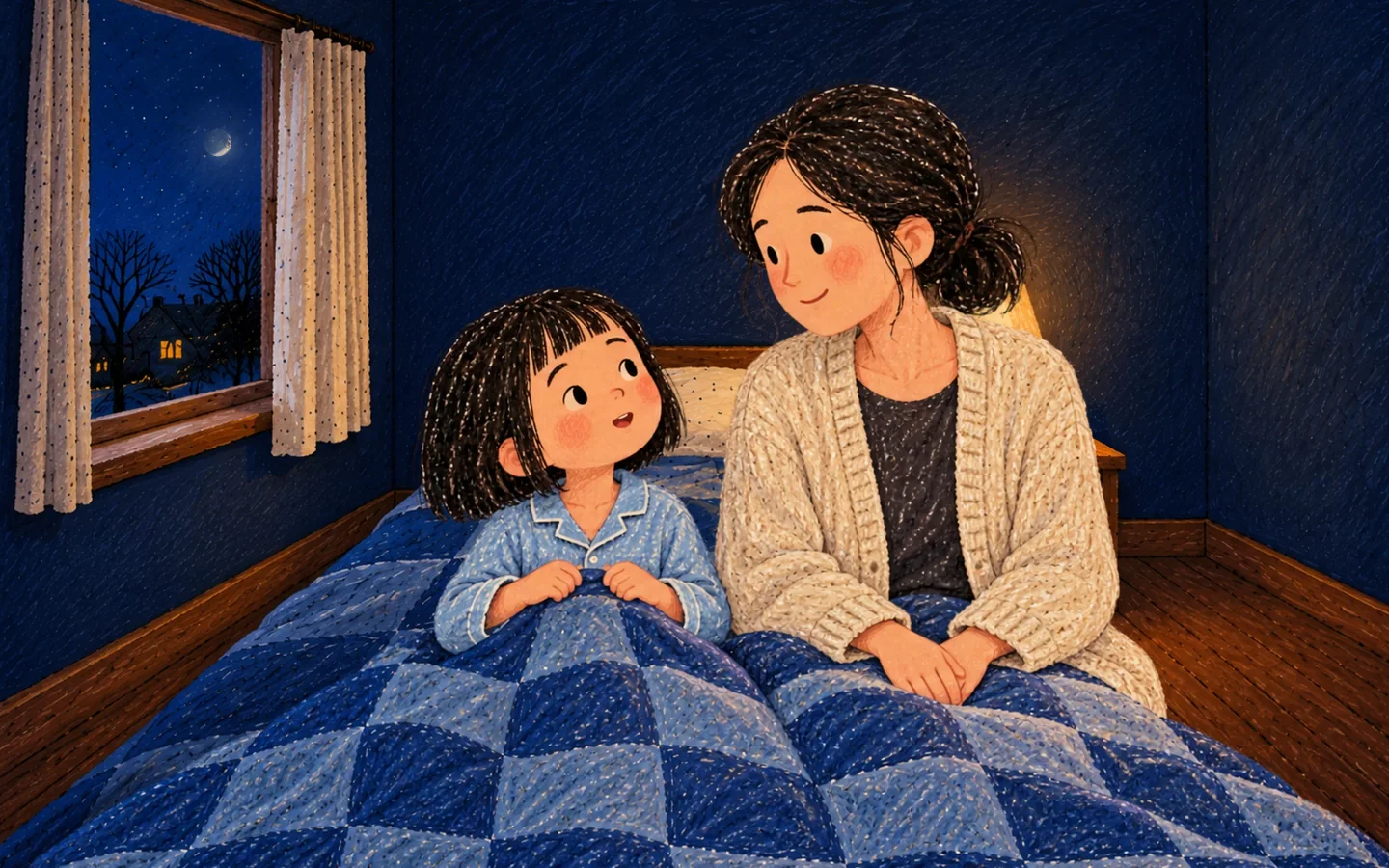
Back in the bedroom. Under the blanket, the girl looks up at her mother, sitting on the edge of the bed. The crescent is back in the window. Girl: So moonlight is really sunlight? Girl: Mama, what is light?
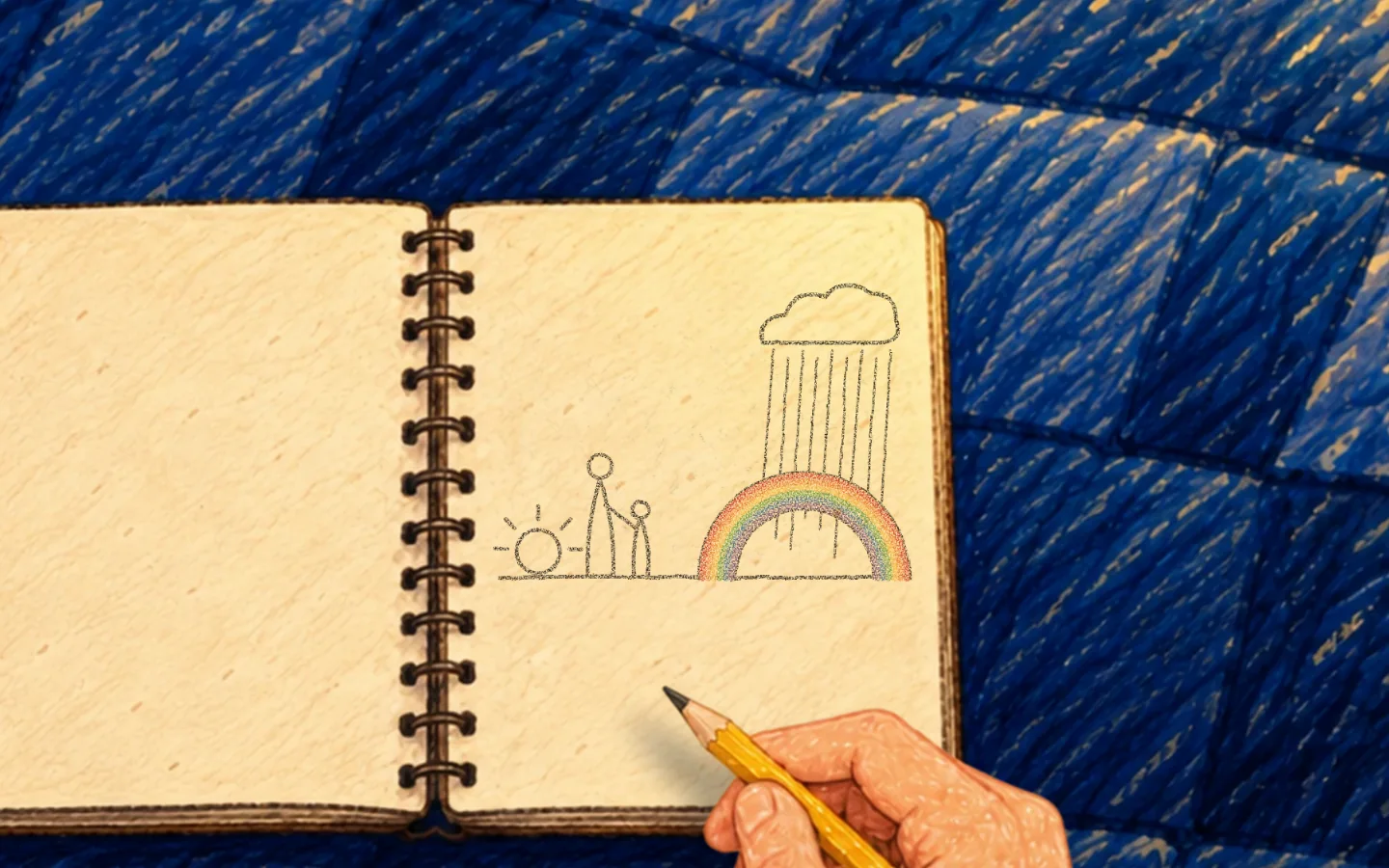
A fresh page. Her mother sketches a memory: the low sun behind the two of them, rain ahead, and a rainbow, red on the outside. Mother: Remember the rainbow after the rain? The sun was behind us. Mother: Sunlight looks white, but it holds every color. Raindrops spread them apart.
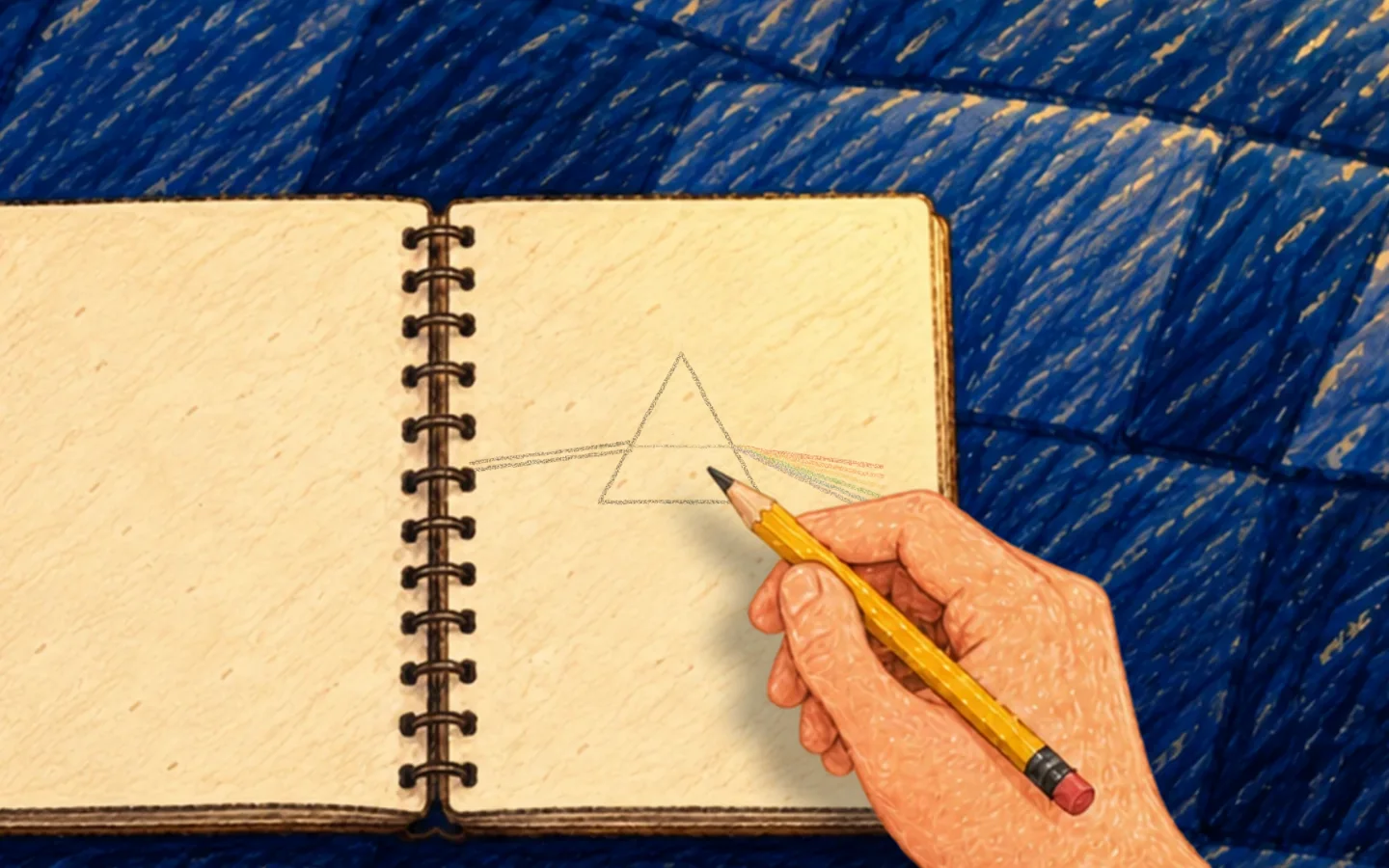
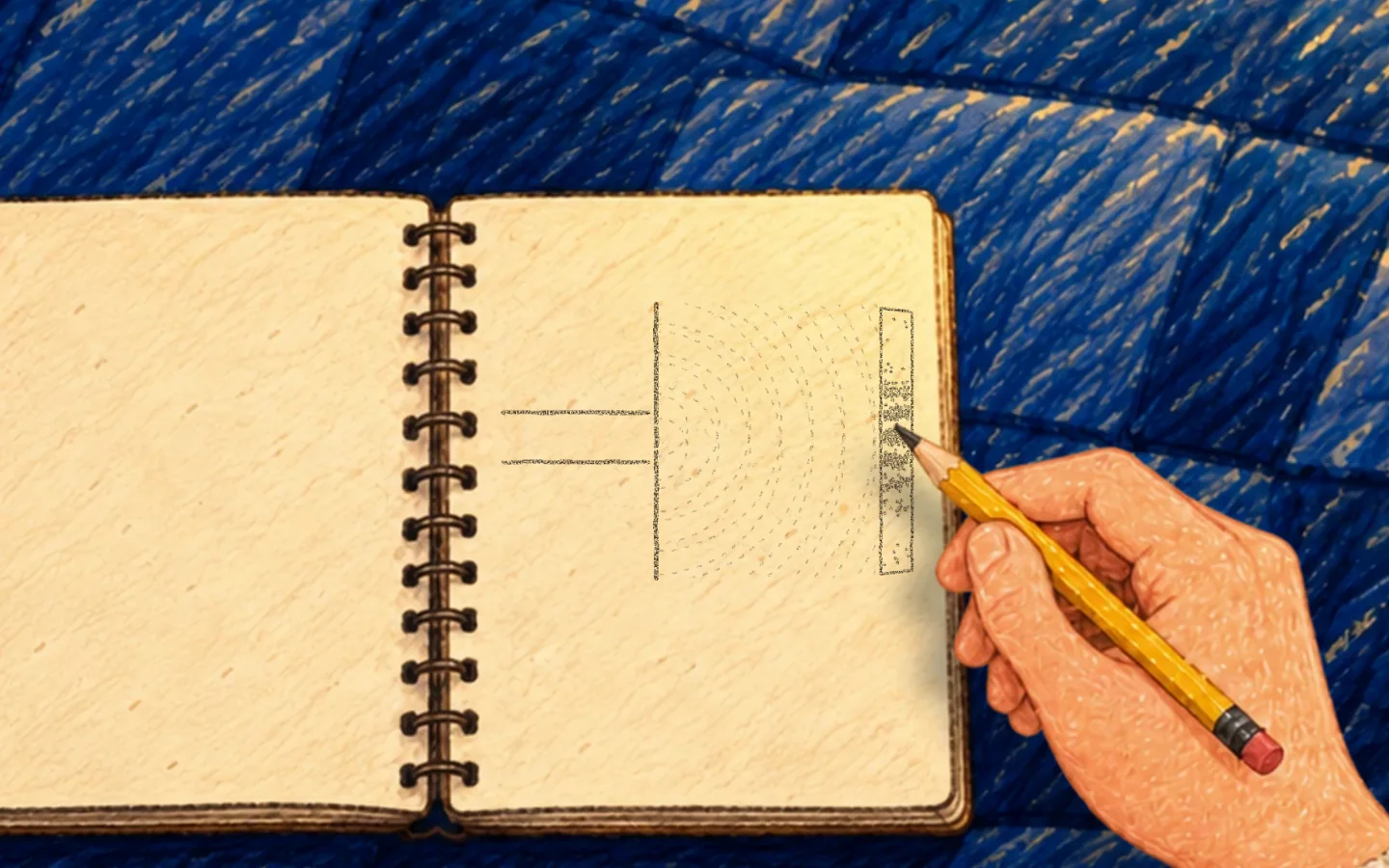
Three pages. A prism splits a beam of white light into colors, red on top. A beam passes two slits; dots land one at a time and build up bright and dark stripes. Then a blank page, the girl’s hand resting on it. Mother: For thousands of years, people asked what light is. Mother: Some found it hides every color. Mother: Others found it spreads like a wave, yet arrives in tiny bits. Mother: Today we understand light very well. But every answer brought new questions.
At the window again, her face close to the glass, her mother’s hand on her shoulder. The moon, the written 月 and her own reflection share the pane. Mother: Now those questions are yours. Mother: Go explore the world, and yourself.
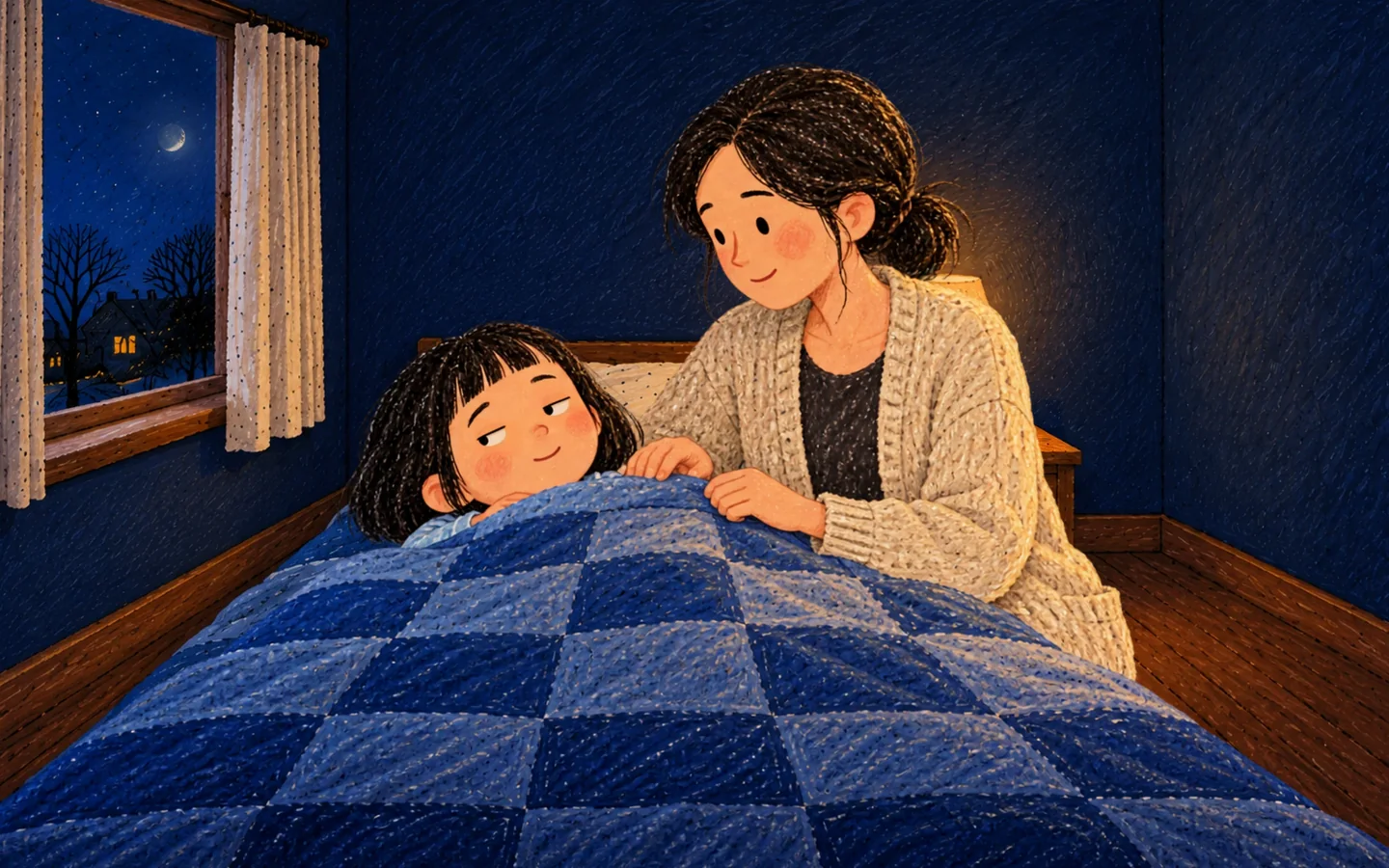
Her mother tucks the blanket up to her chin. Her eyelids are getting heavy. Mother: But first, sleep. Mother: It keeps you healthy, and helps you remember what you learned. Mother: Tomorrow, you’ll be ready to explore the world again.
She is asleep. Her mother switches off the lamp; moonlight is the only light, and the crescent in the window grows clearer.
Know the world. Know thyself. Myrikos, built for curious minds.
Myrikos.
The moon in the window
Know the world. Know thyself.
Myrikos, built for curious minds.
Know the world. Know thyself.
The moon in the window
Mama, what’s that?
That’s the moon.
You know what? In Chinese, “moon” is written 月.
Why does it look like that?
Let me show you.
Over three thousand years ago, people carved what they saw into bone and shell.
A circle meant the sun. A crescent meant the moon.
Copied by hand, generation after generation, it slowly became the 月 we write today.
But what is the moon, really?
Let me tell you a story.
The moon is a big ball of rock. It doesn’t shine on its own.
The sun lights up half of it.
As it circles us, we see more or less of its bright side.
That curve is where the sunlight ends. It’s the curve people drew.
Sometimes Earth’s shadow falls on the moon.
See its round edge? That’s us.
Long ago, people saw that curve and knew the Earth is round.
So moonlight is really sunlight?
Mama, what is light?
Remember the rainbow after the rain? The sun was behind us.
Sunlight looks white, but it holds every color. Raindrops spread them apart.
For thousands of years, people asked what light is.
Some found it hides every color.
Others found it spreads like a wave, yet arrives in tiny bits.
Today we understand light very well. But every answer brought new questions.
Now those questions are yours.
Go explore the world, and yourself.
But first, sleep.
It keeps you healthy, and helps you remember what you learned.
Tomorrow, you’ll be ready to explore the world again.
Sleep well every night, and wake up ready to explore this wonderful world. An alarm that counts from the estimated moment you fall asleep, not from when you went to bed.